
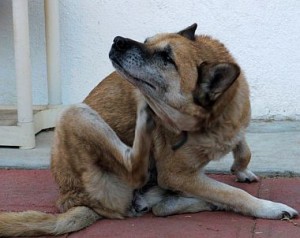
 Allergies are just as irritating and cumbersome for dogs as they are for humans, and account for almost 25 percent of veterinary visits. There are a variety of dog allergies, some more common than others, each with their own way of treating the symptoms and relieving the dog of the ailment. Dog allergies normally start when the dog is between the ages of one and three, however, there are a few cases where dog allergies can start as late as six to eight years.
Environmental Allergies
The most common form of allergies that plague so many dogs is also the same most common allergy with humans – environmental allergies, or atopy. From pollen and grass to dust mites and other airborne factors, environmental allergies can be seasonal or chronic. Symptoms include itching, watery eyes, runny nose, sneezing, coughing, wheezing, and lesions on the skin, and can be mild to quite severe. If you notice any of these symptoms, call your veterinarian, where they can diagnose the problem with blood tests or skin tests.
Believe it or not, a common way to treat environmental allergies in dogs is the use of Benadryl, an anti-histamine that is also used to treat human allergies. If the dog is experiencing a more severe reaction, prescription medication may be needed. Another option is to be given allergy shots by the veterinarian.
Flea Allergies
Flea allergies can be difficult to diagnose in dogs, as any dog (or human) will itch if bitten by a flea. Some dogs actually experience an allergy to flea saliva, which causes them to itch and scratch much more severely than if just simply bitten by a flea, which can mislead owners to think there is a flea infestation. Upon examining the dog and finding only one or two fleas, owners tend to overlook the allergy.
Topical as well as oral flea treatments are commonly used by veterinarians, ridding the dog of any fleas and allowing the allergy to subside.
Food Allergies
So many dogs experience allergic reactions to food, however these are the most difficult to diagnose. Many times a food allergy will actually cause the dog to have ear infections or even red feet, causing owners to avoid looking into their food choice. In order to properly diagnose a food allergy, you must work closely with a veterinarian, performing an elimination diet. Basically the dog is provided with certain kinds of food for 12 weeks, eliminating choices that do not cause reactions. Once that is accomplished, the dog can be put on a diet that does not have the food that caused the reaction to begin with.
Dogs are at risk for developing allergic reactions just as commonly as humans, and these are just the three most common. If you notice any of the symptoms mentioned here, contact your veterinarian for an accurate diagnosis.





“Treating” a dog allergy with benedryl is not actually “treating” the allergy. It’s simply masking the symptom. There’s no chance of actually “curing” the allergy this way.
Dog allergy symptoms are simply an incorrect response from a weak immune system. Build the immune system and the allergy “symptoms” actually go away.
Dogs are carnivores and should eat as such. Corn based foods or commercial pet foods that are full of grains, fillers and chemical preservatives and dyes are “junk food” for dogs. And, over time, the gaps in nutrition show up as allergies, chronic ear issues, paw licking, itching, excessive shedding.
Build the immune system. Give a dog some tools to actually fight allergies. A high quality meaty diet plus a whole food supplement are two great ways to get started to good health.
Here’s a great place to start learning more: http://www.dinovite.com/blog/?p=8649
My Canine Allergy Itch reading indicates that 85% of Itchy DOGs are Allergic to the SAME Enviro Elements that we are ..
Namely Pollens, Mites & Molds.
If you see Symptom Suppressing Allergy MED’s working in your Dog… You know that the ITCH Source is most likely Enviro Elements.
Unfortunately, we also know that Allergy MED’s only Mask Symptoms and that a long Term Solution must be explored.
Comments are closed.